FIELD NOTE # 020
My father and I built a stone wall, and now I see more than a wall
Bringing something into existence with your hands
Without it: Nothing you touch bears your mark. No evidence you were here.
Vermont
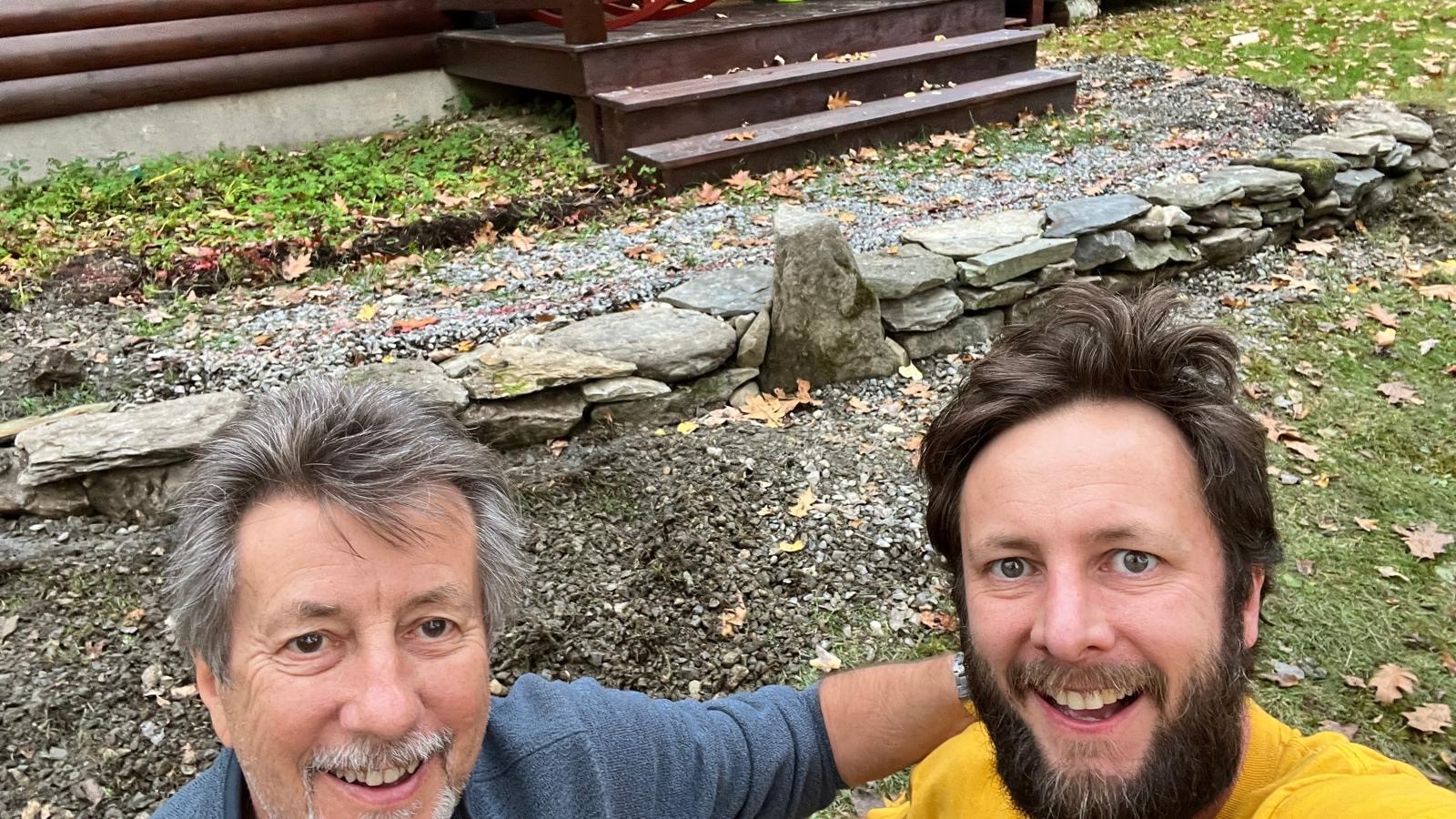
My father came to stay, and we built a stone wall outside the house.
It was a relatively simple job. Stones of different shapes and sizes, laid one on top of another to form a small retaining wall beside outside the front door. Some fitted almost immediately, and others needed turning, repositioning or replacing entirely (sometimes an hour after being first placed elsewhere in the wall). What looked right in your hand didn't always work when you put it down, or in fact work when other stones where then used.
There was something satisfying about that, though. The stones dictated what worked, not us. You could have an idea of where one should go, but ultimately it either sat properly or it didn't. It passed and failed because of the stone, not because of us.
But what I've been thinking about since isn't really the wall. It's that I built it with my dad.
We spend time together whenever we can, but how much of that time involves actually making something? Working alongside one another on a physical task, sharing a problem, and leaving something behind that wasn't there when we started?
I'm not sure it's something I've given much thought to before.
I like the wall. It's useful, and there's a satisfaction in having built something ourselves. But I suspect I'd feel differently about it if I'd done it alone.
Now, every time I walk past it, I know who built it with me. That matters in a way that I don't think a professionally built wall, however well constructed, could replicate.
Most other walls would still do the same job, but it wouldn't mean the same thing.
CURRENT THEORY
Making something with another person appears to create two things: the object itself, and a shared experience that remains attached to it. I wonder how much of the value we get from making things comes from the finished product, and how much comes from having made them together.
NORDRA — Nick Rapley
Copyright — 2026