FIELD NOTE # 005
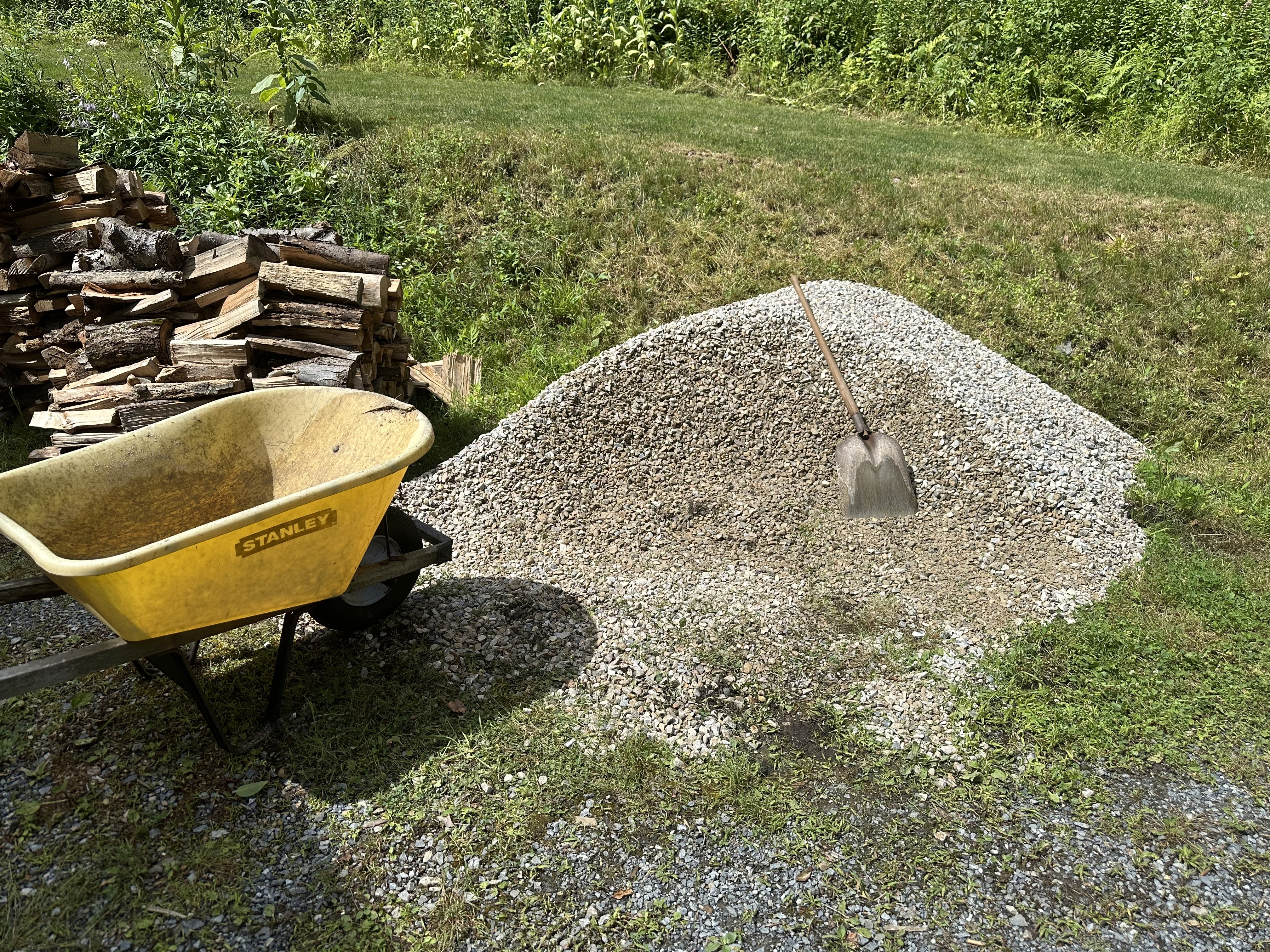
3 tonnes of gravel, moved by hand
Staying with difficulty until it resolves
Without it: Fragility. Small difficulties start to feel large.
Vermont
Five hours of moving gravel from one place to another. Fifty trips. Load the barrow, unload the barrow, repeat.
I could have hired someone, or used a machine. Either would have been faster. Neither would have produced what the afternoon produced.
What was interesting was not only the immediate appreciation of a body that wasn't hardened to the work, but how enjoyable the pain was, during, and after. Part of it was troubleshooting: how to make each trip marginally more efficient. The rest of it was the mind wandering off to other questions that had been sitting unanswered.
The psychological process was the thing I hadn't expected, and it came in three clear phases.
Hour one. Motivation. Get this done as fast as possible.
Hour two. The realisation of the size of the task, and frustration at how slowly it was going.
Hours three to five. Acceptance of the duration. A re-immersion, physical and mental. Contentment in the activity itself, room for expanded thought, better solutions to the task, and appreciation of a job being done well.
The light faded and the work stopped. The satisfaction that arrived was palpable , and the job wasn't finished.
CURRENT THEORY
The satisfaction arrived before the work was complete, which is not what I'd have predicted and is not what most accounts of effort would suggest. So what actually produced it — the work itself, or the point at hour three where I stopped fighting how long it was going to take?
NORDRA — Nick Rapley
Copyright — 2026